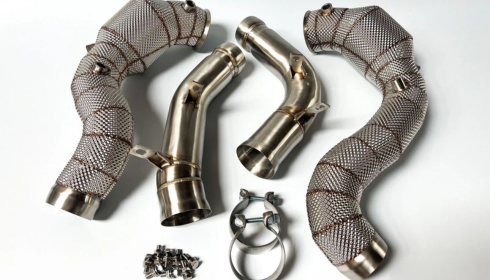
Car enthusiasts who own high-performance vehicles often look for ways to enhance speed, sound, and overall driving excitement. Two vehicles that frequently appear in these conversations are the Mercedes E63 W213 and the Lamborghini Urus. Both machines already deliver exceptional performance from the factory, but aftermarket upgrades can push them even further. One of the most popular modifications among performance enthusiasts is installing performance downpipes.
In particular, upgrades such as mercedes e63 w213 catted and catless downpipes have become widely discussed among tuning communities. These components play an important role in improving engine efficiency, enhancing exhaust flow, and unlocking additional horsepower.
Understanding Downpipes in Performance Cars
Before diving into specific upgrades, it’s important to understand what a downpipe actually does. A downpipe connects the turbocharger to the rest of the exhaust system. In turbocharged engines like those in the Mercedes E63 W213 and Lamborghini Urus, the downpipe is responsible for directing exhaust gases away from the turbo and engine.
Factory downpipes often include restrictive catalytic converters designed primarily for emissions compliance. While these components are necessary for environmental regulations, they can slightly limit airflow and reduce potential performance. Performance downpipes, on the other hand, are engineered to improve exhaust flow, reduce backpressure, and allow the turbocharger to operate more efficiently.
Performance Potential of the Mercedes E63 W213
The Mercedes E63 W213 is already known for its impressive twin-turbocharged V8 engine. However, performance enthusiasts frequently upgrade their exhaust systems to achieve more aggressive sound and better throttle response.
Many owners choose mercedes e63 w213 catted and catless downpipes because they offer different performance characteristics. Catted downpipes retain high-flow catalytic converters, helping maintain emissions control while improving exhaust flow. Catless versions remove the catalytic converter entirely, providing maximum airflow and potentially higher power gains.
Drivers often notice improvements in turbo spool time, stronger acceleration, and a deeper exhaust tone after installing upgraded downpipes. When combined with proper ECU tuning, the gains can be even more noticeable.
Lamborghini Urus: Supercar Performance in an SUV
The Lamborghini Urus is often described as a supercar disguised as an SUV. Powered by a twin-turbocharged V8 engine, the Urus delivers extraordinary speed for a luxury SUV. Even so, many performance enthusiasts seek additional upgrades to maximize its potential.
Aftermarket lamborghini urus downpipes are designed to enhance exhaust efficiency and create a more aggressive engine sound. Because the Urus engine shares some engineering similarities with other high-performance turbocharged engines, improving exhaust flow can unlock noticeable performance benefits.
With upgraded downpipes, drivers often experience faster turbo response, improved horsepower, and a more thrilling driving experience. The deeper exhaust note is also a major attraction for owners who want their vehicle to sound as powerful as it performs.
Catted vs Catless Downpipes
When choosing downpipes, drivers typically face a decision between catted and catless options. Each has its own advantages.
Catted downpipes are usually the preferred option for drivers who want improved performance without completely sacrificing emissions compliance. They include high-flow catalytic converters that reduce restrictions while still filtering harmful gases.
Catless downpipes, however, provide maximum airflow and performance potential. They remove the catalytic converter entirely, which significantly reduces exhaust restriction. This can lead to higher horsepower gains, but may not be legal for road use in certain regions.
Vehicle owners should always check local regulations before installing catless exhaust components.
Installation and Tuning Considerations
Installing performance downpipes is a relatively advanced modification and should ideally be done by experienced professionals. Because these components directly affect the turbocharger and exhaust system, proper installation is essential for safety and performance.
Additionally, many vehicles benefit from ECU tuning after installing downpipes. Tuning allows the engine management system to adapt to the improved airflow and optimize fuel delivery, ignition timing, and boost levels.
Without proper tuning, the vehicle may trigger warning lights or fail to fully utilize the performance potential of the upgrade.
Final Thoughts
Upgrading downpipes is one of the most effective ways to improve the performance and sound of high-performance vehicles like the Mercedes E63 W213 and Lamborghini Urus. These modifications enhance exhaust flow, reduce turbo lag, and create a more exciting driving experience.
Whether a driver chooses catted or catless options, quality components and professional installation are essential. With the right setup, these upgrades can transform already powerful machines into even more thrilling performance vehicles.